
SPACEBEL Kicks off 2024 on a High Note with a Major Comet Interceptor Contract
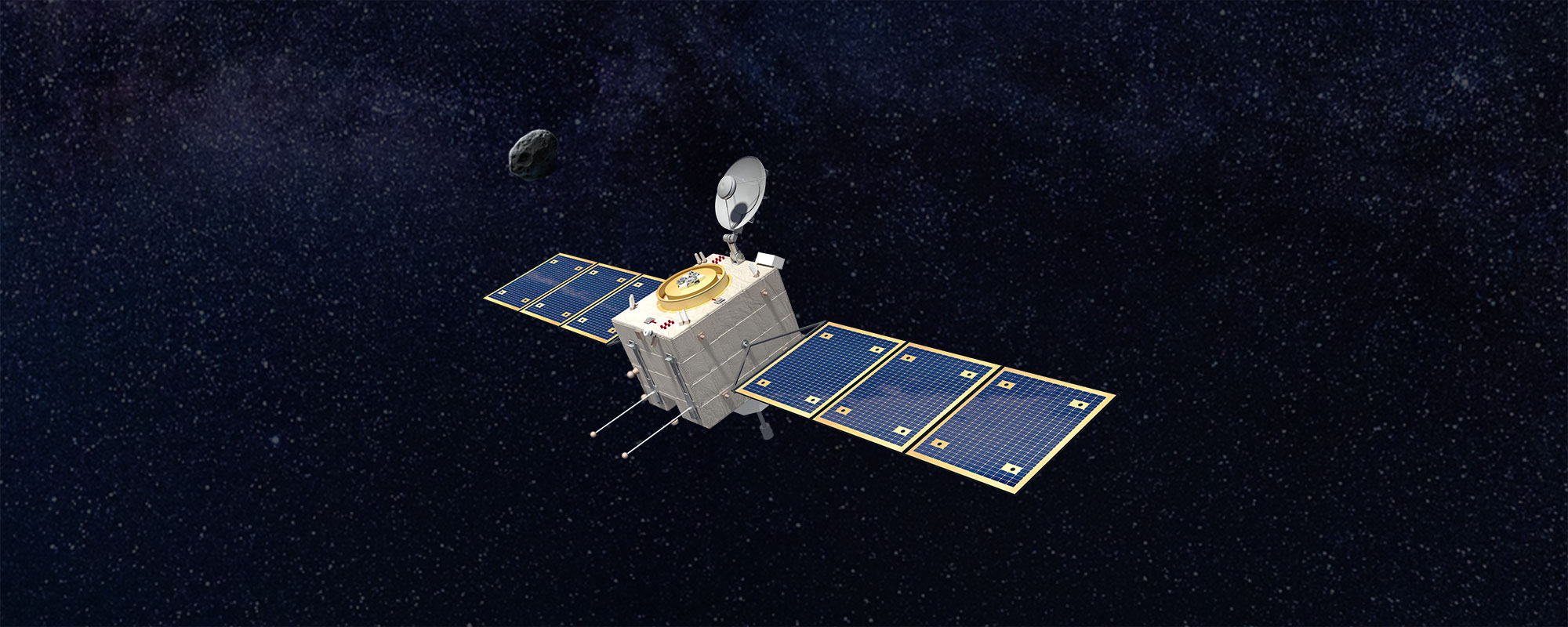
First European deep Space mission to visit a pristine comet or interstellar body entering the inner Solar system, Comet Interceptor will offer new insights into the dynamic nature of comets as well as the origins of our solar system.
SPACEBEL has recently signed an important agreement with OHB Italia S.p.A. (Milano), prime contractor of the Comet Interceptor Mission, a programme of and funded by the European Space Agency. The said contract regards the provision of the Central Software that manages the whole spacecraft, its platform equipment and its payload instruments. This new project will involve a team of up to ten SPACEBEL engineers over the next two years.
Scheduled for launch in 2029, Comet Interceptor will comprise 3 spacecraft carrying high-tech payloads. The mothercraft and its two probes will travel together to the second Lagrange point located at 1,5 million kilometres from Earth. There, unless identified before launch, they will wait for a suitable target, i.e. a yet-to-be-discovered comet containing material that has remained unaltered since the formation of our Solar system, about 4,5 billion years ago. A few hours before intercepting the comet, the three modules will separate and perform simultaneous observations from multiple locations and angles in order to provide 3D data of the comet’s nucleus, gas, dust and plasma environment. The mission is expected to achieve its objective within 5 to 6 years after launch.
Led by ESA, and with the support of the Japanese Space Agency JAXA, responsible for one of the two probes, this innovative project is a fast or F-class mission, i.e. with a limited implementation time – in this case ± 8 years from initial proposal selection to launch readiness.
Comet Interceptor is also contributing to the overall ESA’s planetary defence efforts, by performing studies that may help to protect our planet. The same holds for ESA’s upcoming Hera mission to be launched in October 2024 and to which SPACEBEL is also bringing its know-how at several levels: the Hera flight software, an impressive series of simulation software and the Milani & Juventas Cubesat Mission Operations Centre (CMOC) development in Redu (Belgium).
SPACEBEL’s contribution to exploring comets can be traced back to the late ‘90s. SPACEBEL was involved in the Rosetta comet explorer with the development of a software validation system whereas VTS, the visualisation tool for Space Data developed by SPACEBEL in Toulouse for CNES was used in the frame of this historic mission in order to monitor the separation, descent and landing phase of the Philae lander on the comet.
With Comet Interceptor, SPACEBEL notches up another strategic reference in the field of critical software for Space exploration missions!
The view expressed herein can in no way be taken to reflect the official opinion of the European Space Agency.